Teeth Whitening
Professional Teeth Whitening Treatment From a General Dentist
Tooth discolouration develops gradually. Coffee, red wine, tobacco and the natural aging of enamel all play a role, and the change is often noticed only when an older photo is set beside a recent one. At 123DENTIST, a whitening treatment planned and supervised by your dentist addresses that discolouration under professional control, whether you prefer a single chairside session or a gradual change at home.
Whitening treatment at a dental office uses peroxide-based gels that whiten your teeth from within, not simply polish the surface. Your dental team offers two routes, an in-office whitening session or custom take-home trays, and assesses your oral health before either one begins. It is one of the treatments available through our cosmetic dentistry services, in clinics across Canada.


Different Stains Call for Different Whitening Methods
Teeth can gradually become darker with age, while habits such as smoking, drinking coffee, and certain medications can contribute to faster discolouration. Some stains are limited to the enamel’s outer surface and may respond to professional teeth cleaning or whitening toothpaste. Other types of discolouration develop deeper within the tooth and may require a bleaching treatment to lighten them. Surface whitening products primarily help remove external stains, whereas peroxide-based treatments work deeper by changing the tooth’s overall colour.
Yellow-toned staining usually responds well to whitening treatment, while grey or brown tooth discolouration is more stubborn. A dental exam tells you which kind you have, and which whitening option suits it.
In-Office Teeth Whitening at Your Dental Clinic
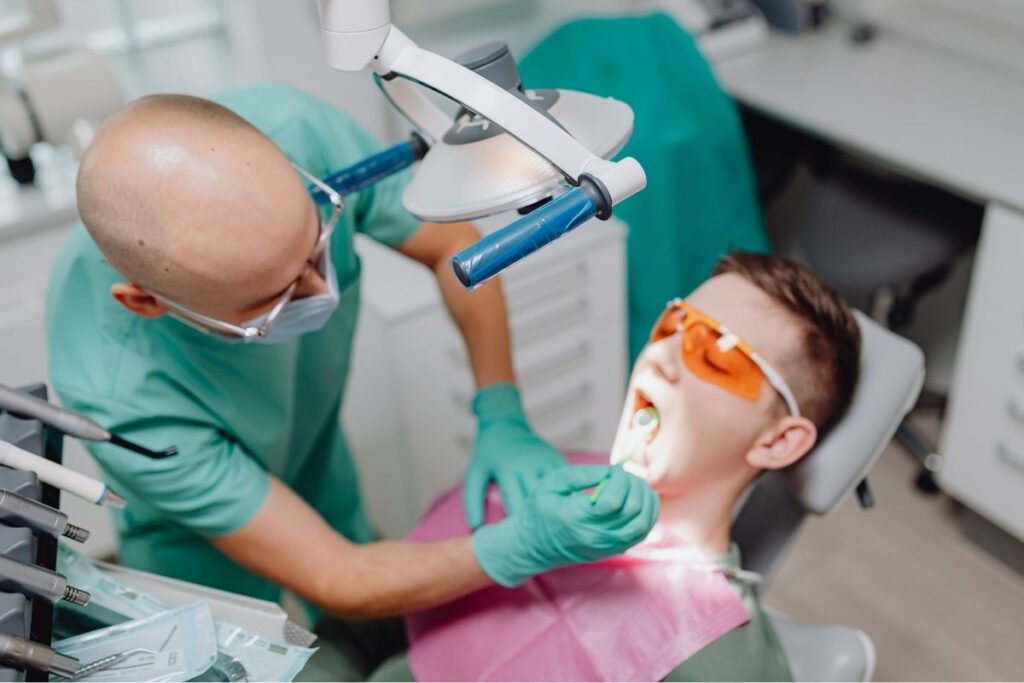
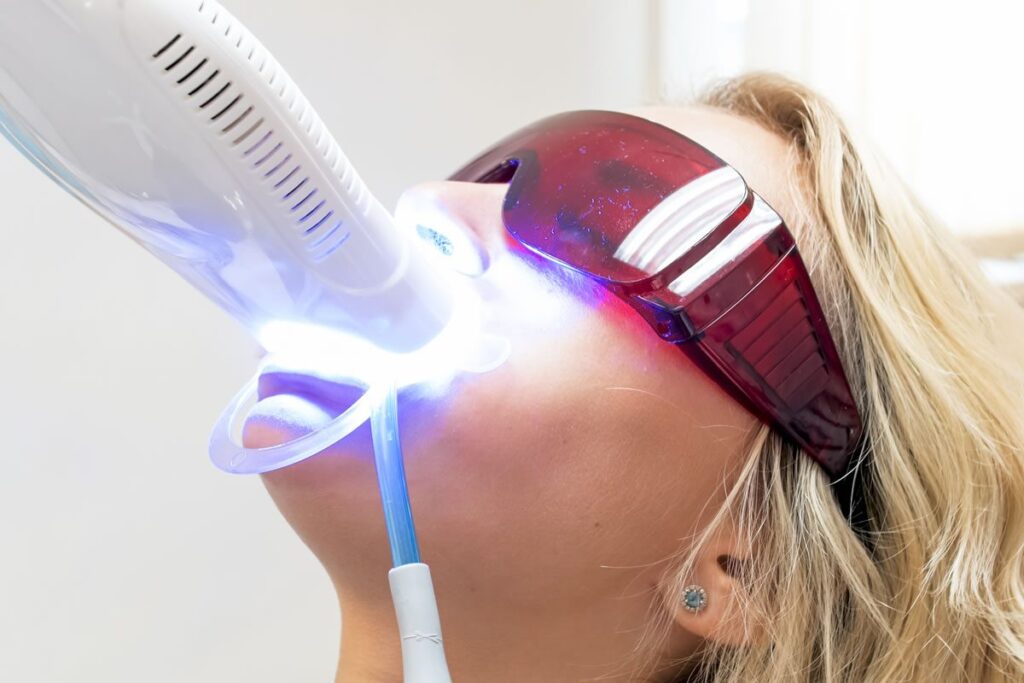
This is the faster route. At the dental clinic, your dentist places a protective barrier over the surrounding soft tissue, paints on the whitening gel, and activates it with a special light. The appointment usually takes under an hour. Results vary from person to person. Before treatment begins, your general dentist will assess your teeth and recommend the most effective approach for your specific needs.
The appointment usually takes under an hour. Results vary from person to person. Before treatment begins, your general dentist will assess your teeth and recommend the most effective approach for your specific needs.
Health Canada notes that higher peroxide concentrations are permitted for in-office formulas because they are applied by a professional who has precise control over the application. Mild tooth sensitivity afterward is common, especially with hot or cold drinks, and it usually settles within days. This route also pairs well with the checkups and cleanings covered by general dentistry services.


Take-Home Teeth Whitening Kits From Your Dentist
If you prefer a slower, gentler approach, your dental team takes impressions to create custom whitening trays that fit your teeth precisely, then dispenses a bleaching gel to use on your own schedule, typically about 30 minutes a day for a week or two. Your dentist will provide a personalized schedule, specify the exact amount of gel to apply, and give you complete instructions based on your individual needs to ensure you use it safely and effectively at home.
Whitening results come in gradually, and the process is easy to pause if your teeth feel tender.
A take-home tray system from a dental office is still a professional-strength product. You are simply applying it at home, with written instructions and a follow-up visit. Some people choose the take-home whitening route on its own; others use it to maintain their shade between dental appointments.
How Professional and Store-Bought Whitening Products Differ
Drugstore whitening options vary. Whitening toothpastes and most whitening strips act mainly on surface stains, through mild abrasives or a low concentration of peroxide, while the peroxide gels dispensed at a dental office act on the colour within the tooth.
Health Canada classifies all tooth whitening systems as cosmetics and requires evidence of safety, including clinical data on salivary peroxide levels, for any product above 3% hydrogen peroxide equivalents, approximately 10% carbamide peroxide. Your dentist can tell you which category a given professional treatment or retail product falls into.
Does Teeth Whitening Cause Tooth or Gum Sensitivity?
It can, and it is a common effect. The Canadian Dental Association notes that tooth sensitivity and irritation to soft tissues can occur during bleaching, but that these effects are transient. Health Canada describes the same effect as usually temporary. A tray that fits properly keeps gel off your gums.
Your dental office also screens you first. Untreated cavities, worn enamel, or signs of periodontal disease are handled before any tooth bleaching starts, which is part of why steady dental care and good oral hygiene come before whitening begins. If sensitivity appears, a desensitizing toothpaste usually settles it.
What Whitening Cannot Change
Whitening does not lighten everything in your mouth. Health Canada states that tooth whiteners will whiten only natural teeth, not caps, crowns, veneers, fillings or dentures. If you have dental crowns or veneers in your smile line, they hold their original shade while the teeth around them lighten.
That is worth planning for. Many people whiten their teeth first and have a new restoration colour-matched to the brighter shade afterward. A tooth that darkened after root canal treatment may need internal bleaching rather than a standard whitening treatment. A dental professional can identify which teeth are expected to respond to whitening and which may require a different approach.

Book a Whitening Assessment With Your Dentist
Consult with your dentist for an assessment, and you will leave with a treatment plan built around the shade of your teeth and your oral health. Because teeth whitening services are cosmetic, it is worth reviewing the dental insurance we accept and our patient financing options first.
Find a Dentist Offering Teeth Whitening Near You
123Dentist is a network of dental clinics across Canada, from British Columbia through the Prairies, Ontario and the Atlantic provinces, so a clinic is usually within reach of where you live or work.
Each location is staffed by dentists who assess tooth discolouration as part of a complete oral health examination, and every clinic in the network accepts the Canadian Dental Care Plan (CDCP) for eligible care such as exams, with cleanings and basic treatment. Whitening itself is a cosmetic treatment and sits outside CDCP coverage. Find the dental office closest to you and book an assessment to discuss which whitening treatment suits your teeth.

Brighten your smile safely and effectively.
If your smile’s been feeling off lately—not as bright, not as confident—there’s a safe and simple path back.
