Crowns
When a tooth needs backup, a crown can step in.
Teeth don’t always break all at once. It could be a crack you barely notice, a corner that’s worn down, or a filling that’s been redone too many times. Whatever the reason, a crown gives that tooth a second chance—by covering it up and helping it carry on.
This isn’t about making things perfect. It’s about preserving what’s there, protecting it from more damage, and keeping your bite feeling solid.

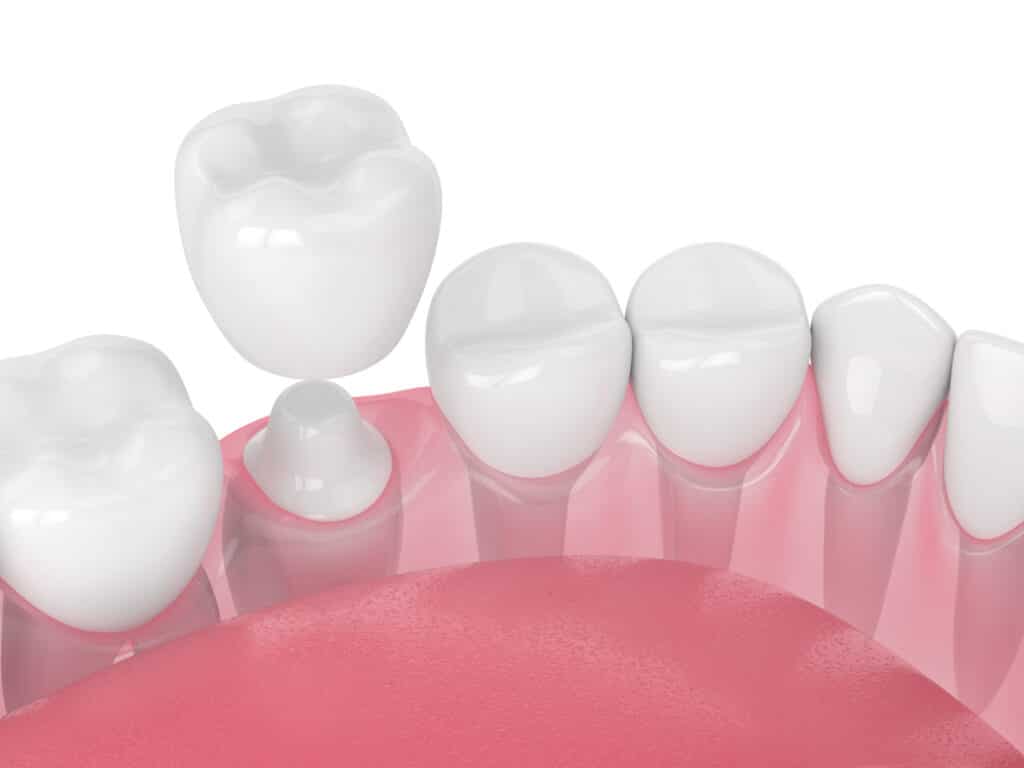
Crowns are there to protect, not replace.
A crown is a custom-made cover that fits over a tooth that’s weakened, broken, or not holding up on its own. It wraps around the visible part, sealing it off and letting you use it comfortably again.
Your dentist might suggest a crown if:
• The tooth has cracked or chipped
• There’s been a root canal
• A big filling is breaking down
• An implant needs a visible tooth on top
• Your bite is off and needs balance
It’s a simple way to prevent bigger problems—and to give a worn-down tooth the reinforcement it needs.
A small fix that makes a big difference.
Most crowns take two appointments. First, your dentist shapes the tooth, takes an impression or digital scan, and places a temporary crown. A couple of weeks later, you come back for the permanent one.
The steps might include:
• Local numbing to keep things comfortable
• Scans or molds to create a perfect fit
• A short-term crown while yours is being made
• A final visit to place the crown for good
Crowns can be made from porcelain, metal, zirconia, or a mix—and your provider will walk you through the best choice for your bite, your smile, and your comfort.


Your crowns questions, answered.
A crown can help you keep the tooth—and the confidence that comes with it.
If one tooth is starting to fall behind the rest, a crown might be all it takes to keep your smile moving forward.