Intraoral Camera
It’s your mouth. You deserve to see what’s going on inside.
Dentistry used to be a bit of a mystery—your provider would check something, say a few things you couldn’t quite hear, and then make a recommendation.
Intraoral cameras change that. Now, you can actually see what they’re seeing. Up close. In real time. Whether it’s a crack in a tooth, a bit of inflammation, or an old filling that’s starting to wear down, it’s right there on the screen—and suddenly, it all makes sense.
Better decisions come from better understanding.
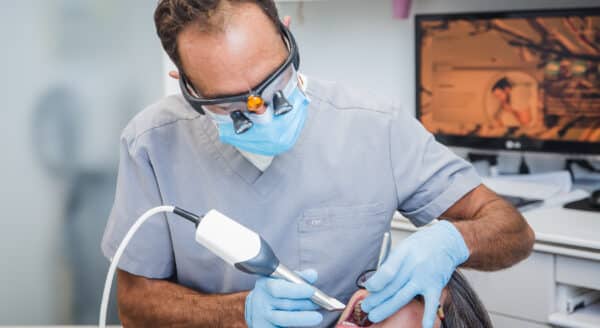
An intraoral camera is a small, wand-like device that takes detailed images inside your mouth. It shows things you’d never catch in a mirror—like the surface of a molar, a spot near the gumline, or a fracture line you didn’t know was there.
And it’s not just about the image—it’s about you having a clearer sense of what’s happening, and why your provider recommends a specific treatment.
Your dentist might use an intraoral camera to:
• Show you the early signs of decay or wear
• Document cracked teeth, broken fillings, or gum issues
• Track changes over time with side-by-side images
• Improve accuracy when explaining your options
• Help with insurance documentation when needed
Seeing is believing—and when it comes to your own health, that clarity can go a long way.
No radiation. No pain. Just perspective.
Using an intraoral camera is quick and completely non-invasive. It’s not an X-ray. There’s no radiation, no pressure, and nothing to “endure.”
Here’s how it typically works:
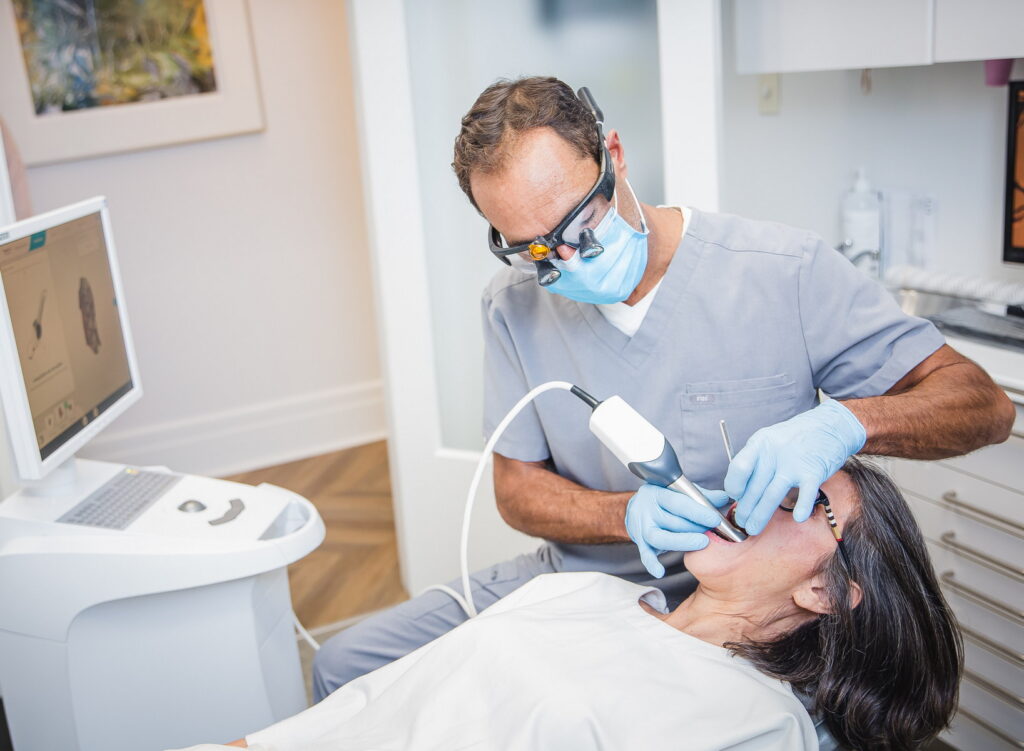
• Your provider gently guides the camera inside your mouth
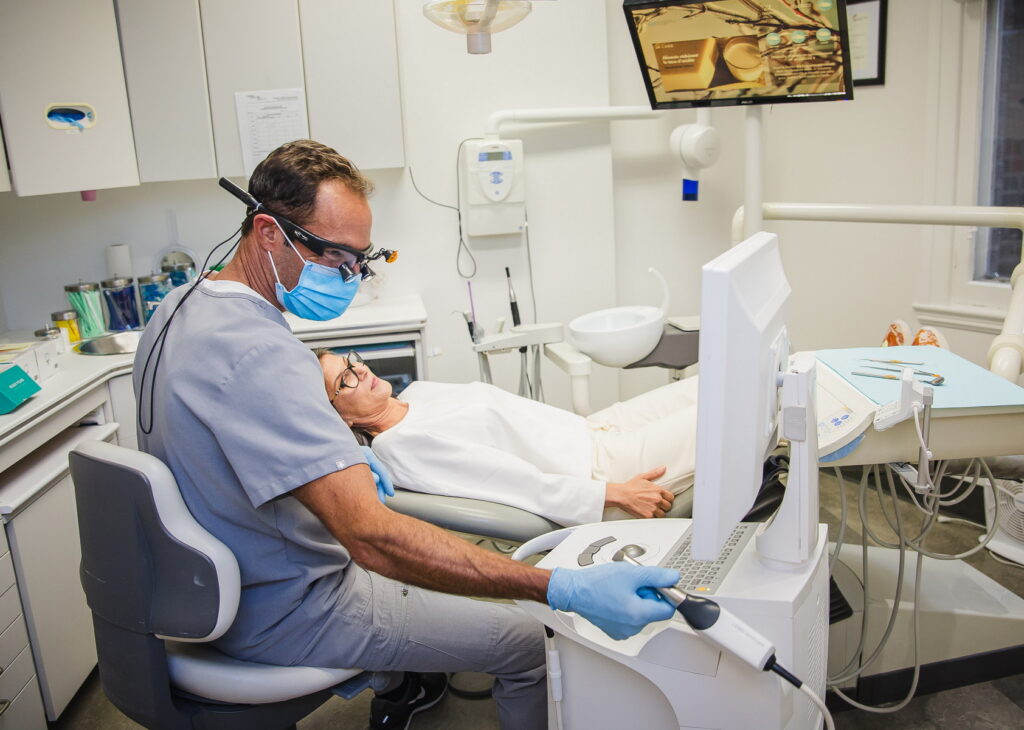
• The image appears in real time on a nearby screen
• They may pause to take snapshots or zoom in on areas of concern
• You’ll see exactly what they see—and can ask questions as you go
• Images may be saved for future reference or insurance support
Most patients find it fascinating—and often say, “I had no idea that was there.”

Your dental questions, answered.
It’s your mouth—and you deserve to be part of the conversation.
With an intraoral camera, your dentist isn’t just telling you what’s wrong. They’re showing you.
And that makes decisions clearer, conversations easier, and care more collaborative.